How I replaced a broken search box with conversational AI to get mentees from confusion to a confirmed booking.

ADPList's mentor search was broken at the point of first-time activation. Mentees knew they needed help but couldn't translate a situation into a query that returned a relevant, available, trustworthy result.
I designed an AI-powered conversational search that captures mentee intent through natural language and maps it to mentor recommendations ranked by ADPList's platform signals.
Within the first quarter post-launch, activation rate increased 20% and 67% of users who completed the conversation booked a session.

ADPList - a global mentorship platform with 32,000 mentors across 140 countries.
Healthy Numbers, Broken Funnel
The funnel data looked deceptively fixable – 74% of users completed onboarding, but it took over 24 hours to make the first booking. Our assumption was that search quality was a data and filter problem.
What the research actually showed was a different problem – mentees were spending time shortlisting only to hit timezone mismatches, inactive profiles, and no-shows.

Mentors appeared in results but weren't actually active. Members booked, got no-shows, and stopped trusting ADPList as a reliable place to find mentorship.
Mentor demand was concentrated, not distributed
Qualified mentors were active on the platform but receiving less bookings and had no visibility into why. Meanwhile, mentors from known companies sat behind 100+ waitlists.
Mentees searched for logos, not fit
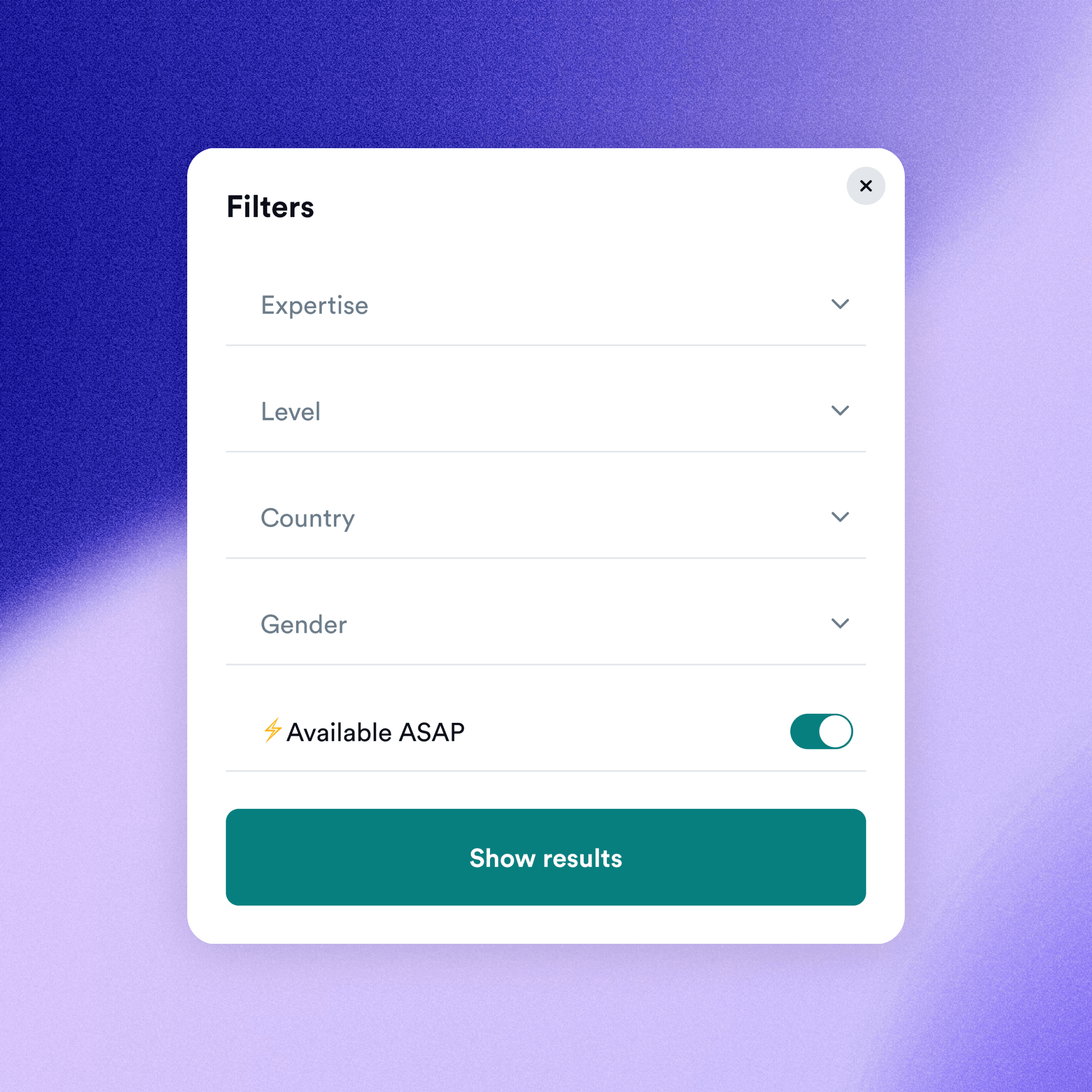
The platform was optimising for filter depth while the real problem was mentee bias. Users searched by brand – Google, Apple, Meta – overlooking other equally qualified mentors.


Hypothesis
"You can't retain someone you never activated. Until a mentee could find a mentor relevant enough to book and compelling enough to return to, every retention intervention was solving the wrong problem."

Strategy
Search Became a Conversation
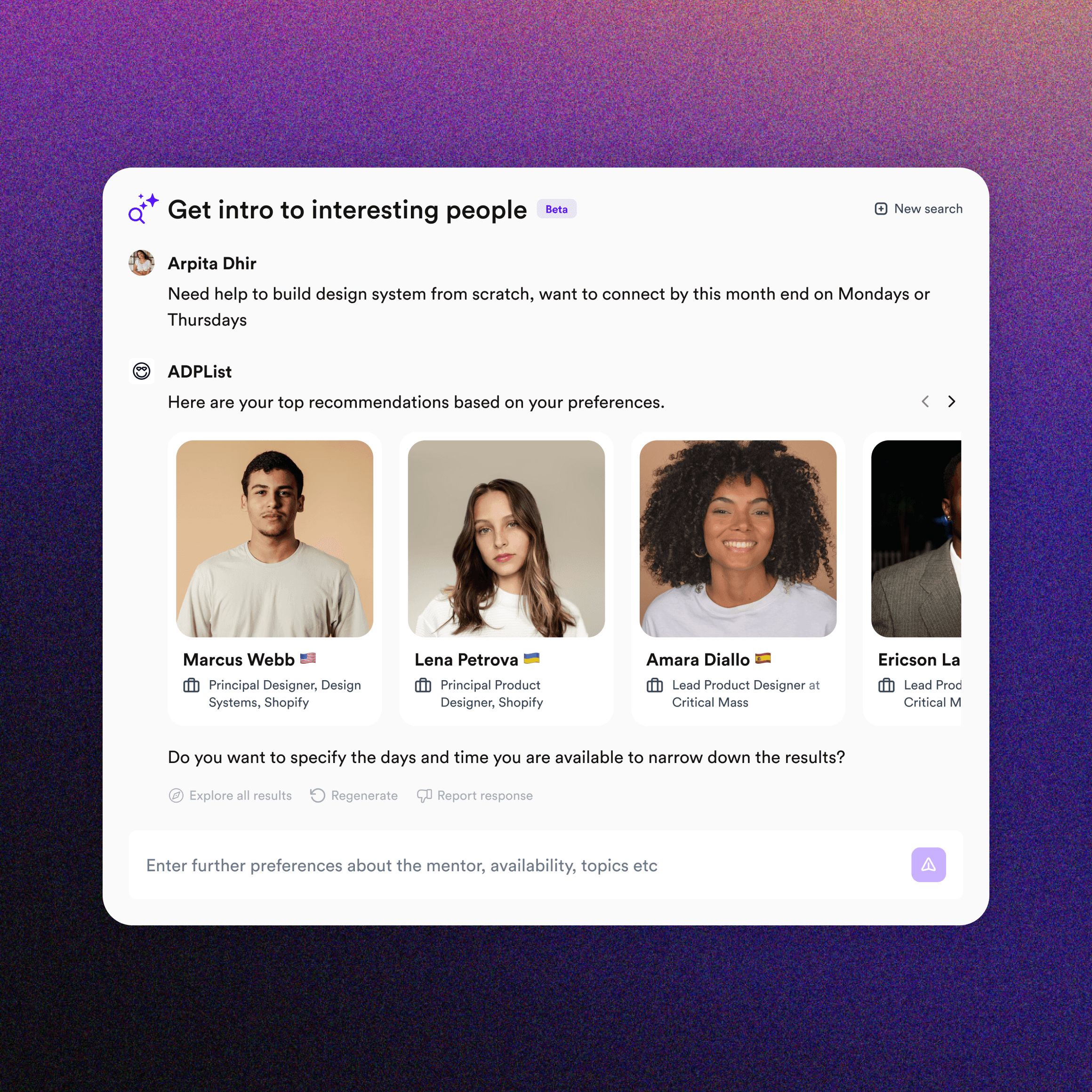
I made the call to lead with intent. By adding a conversational AI layer at the entry point, mentees could describe their situation in natural language and receive recommendations matched to their goals, availability, and fit.

The biggest drop-off risk in a conversational flow is the opening moment. I designed pre-written starters so the cognitive load of the first message was near-zero.

Quick View to Keep Momentum
Opening multiple full profiles to compare candidates was breaking the flow at the point closest to a booking decision. I added a profile quick view so mentees could evaluate a recommendation without leaving the conversation.

Ranking Is a Platform Decision, Not an AI Decision
I made the explicit call that the AI surfaces candidates but doesn't own final ranking. ADPList's signals remain the ranking layer. This wasn't just bias prevention, it directly addressed mentors who appeared available but weren't reachable.

Intent Flows Both Ways
The AI matched on both signals not just what a mentee was looking for, but what a mentor was there to give. Better inputs on both sides meant better matches for everyone.

Trade-offs
Don't Wait for Certainty to Recommend
Engineering's position was that the AI needed multiple exchanges for all details, before it could recommend. I pushed back – deferring recommendations with multiple back and forth, would cost us completion rate. We must surface candidates after the first prompt and use subsequent turn to refine.

Track the AI, Own the Ranking
The risk of AI-owned ranking was a black box – no visibility into why a mentor ranked above another, and no way to know if results were better or just different from filters. I kept ranking with ADPList's signals and pushed to track everything: queries, conversation turns, prompt selections, drop-off points. Engineering pushed back on the effort but I pushed back without that data, fast iteration was impossible.
Impact
The numbers below aren't feature adoption metrics. They're signals that the shift from volume to depth actually worked.
Post-Launch Iterations
Bringing the Conversation Forward
Post-launch data showed mentees weren't giving the best prompts because the prompt suggestions were a click away. We moved them upfront, making intent easier to express from the first moment without any additional interaction.

Reflections
Fixing activation meant fixing discovery – but discovery wasn't broken because of bad search results. The effort required to find a reliable match was high enough that users discounted the outcome before they even met.
The AI layer made the two-sided nature of that problem visible: sometimes the bottleneck was mentee articulacy, sometimes mentor data quality, sometimes activity signals.
Curated sequences of mentors and sessions built around a specific career goal. Less browsing, more progress.

