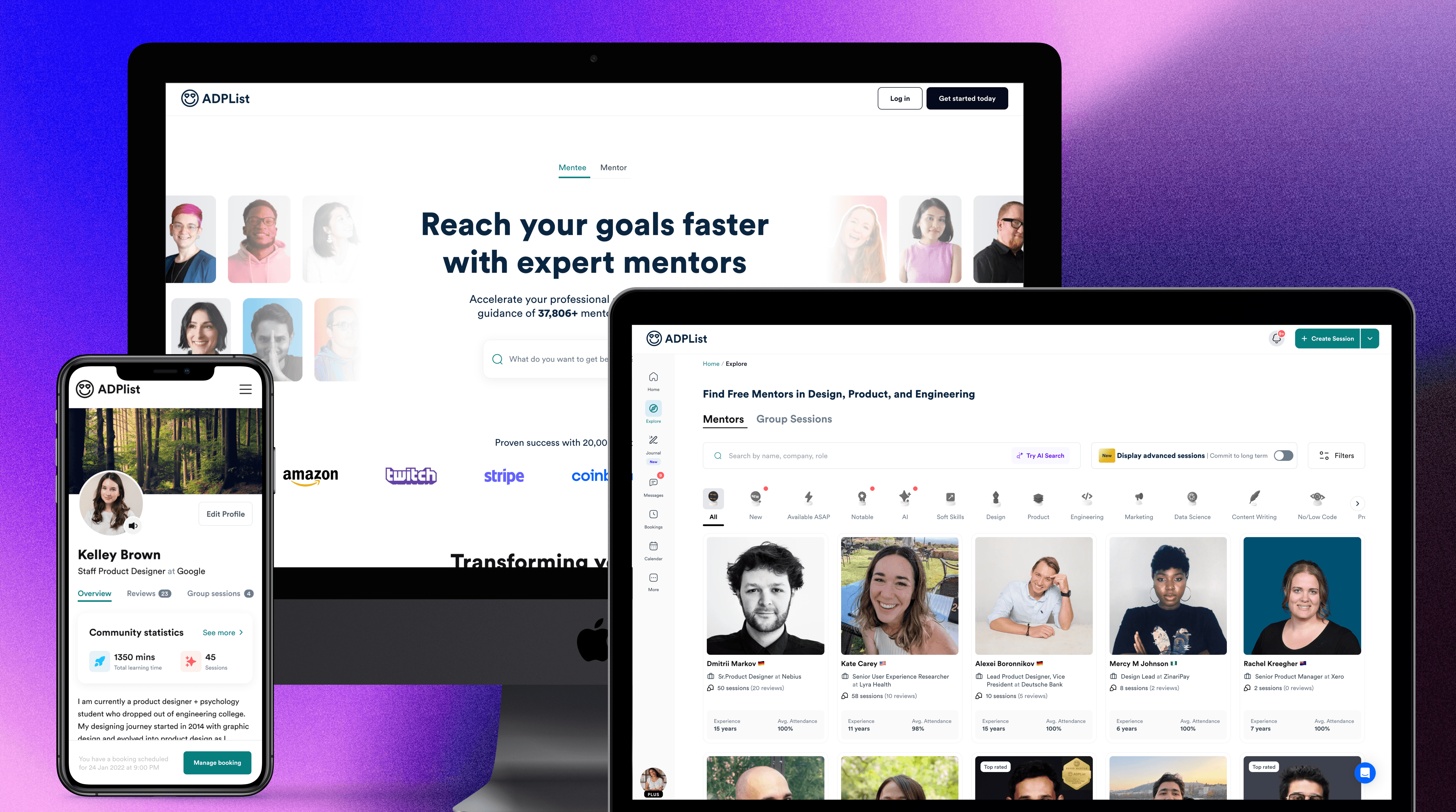
ADPList - a global mentorship platform with 32,000 mentors across 140 countries.
Sessions were being recorded – but watching back a full video to find one insight isn't how anyone works. Most users didn't take notes – too focused on the conversation. Few who did went to Notion or Google Docs. Either way, value left the platform and the next session started from zero.
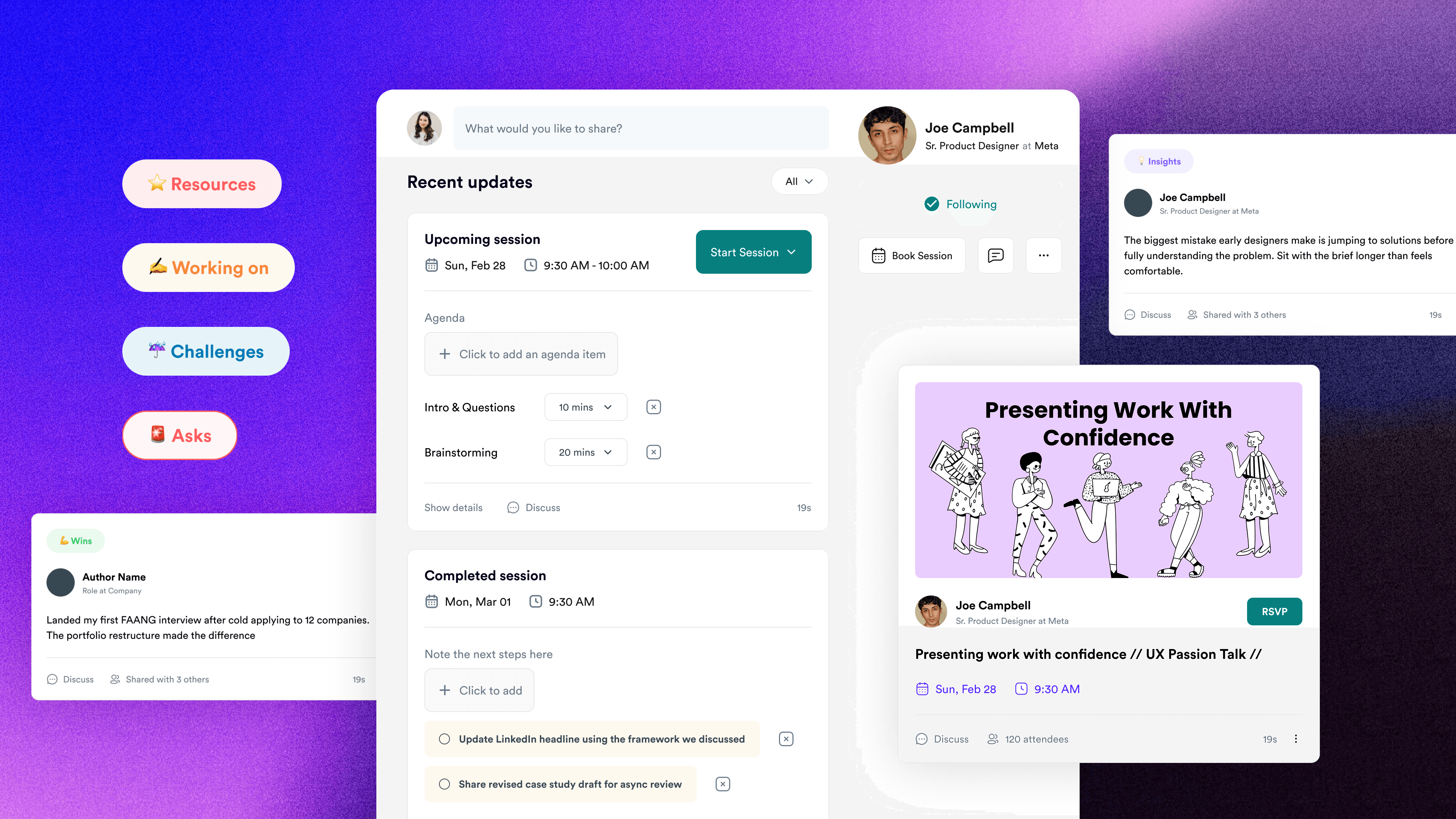
This feature was built for the highest-value moment in mentorship – sharing curated insights, resources, and action items between mentor and mentee. But it was a buried feature and for the few who found it, the friction was immediate as notes had to be filled manually, after the call.
Hypothesis
"If we could store session context, mentees would be better prepared, mentors could focus on progress and the relationship would compound over time improving platform retention"
Strategy
I ran a manual experiment before writing a PRD. What came after was shaped by that signal – consent designed for trust not speed, the journal surfaced at the moment sessions mattered most and AI output tested until it was worth returning to.
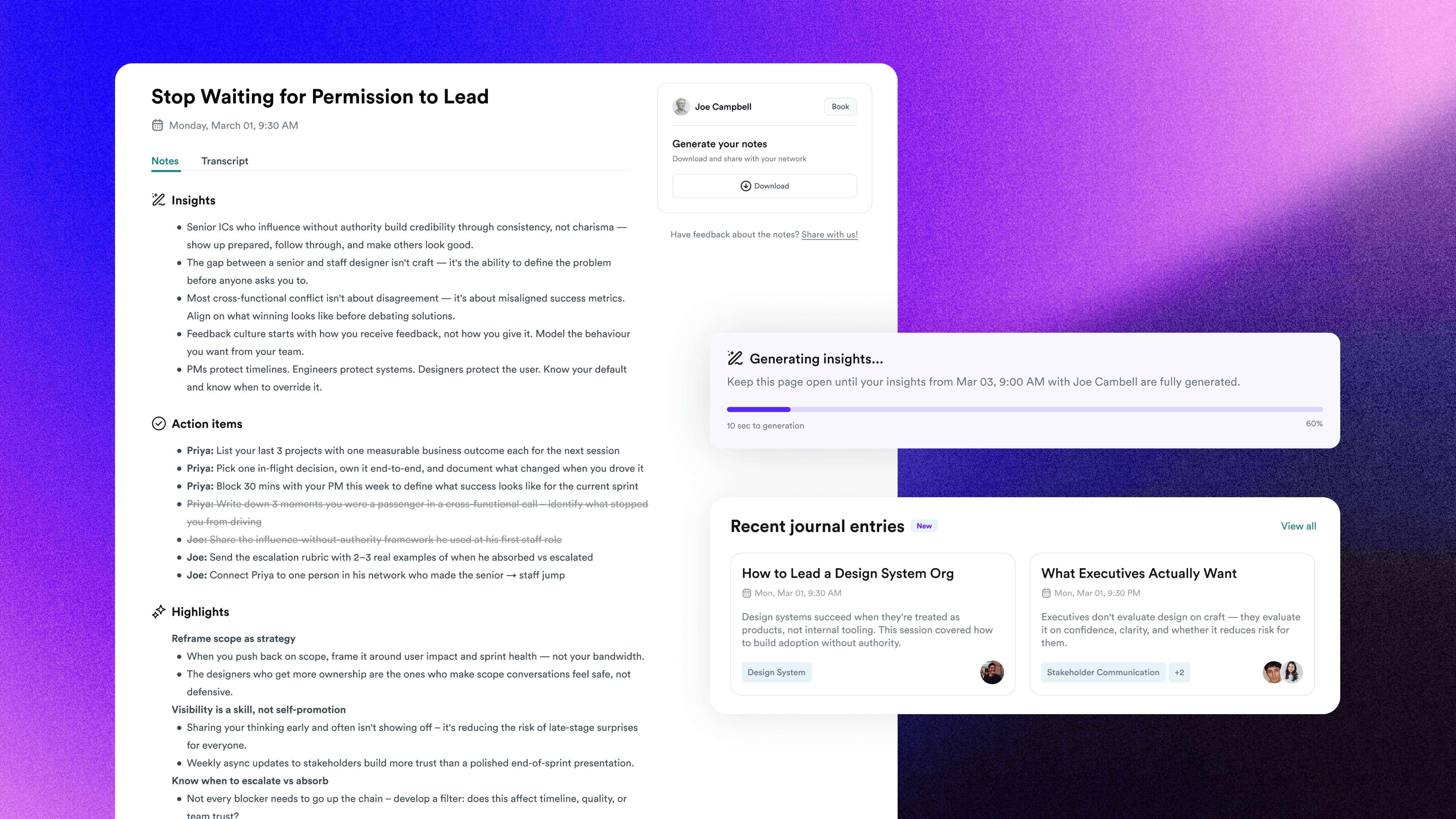
Experiement
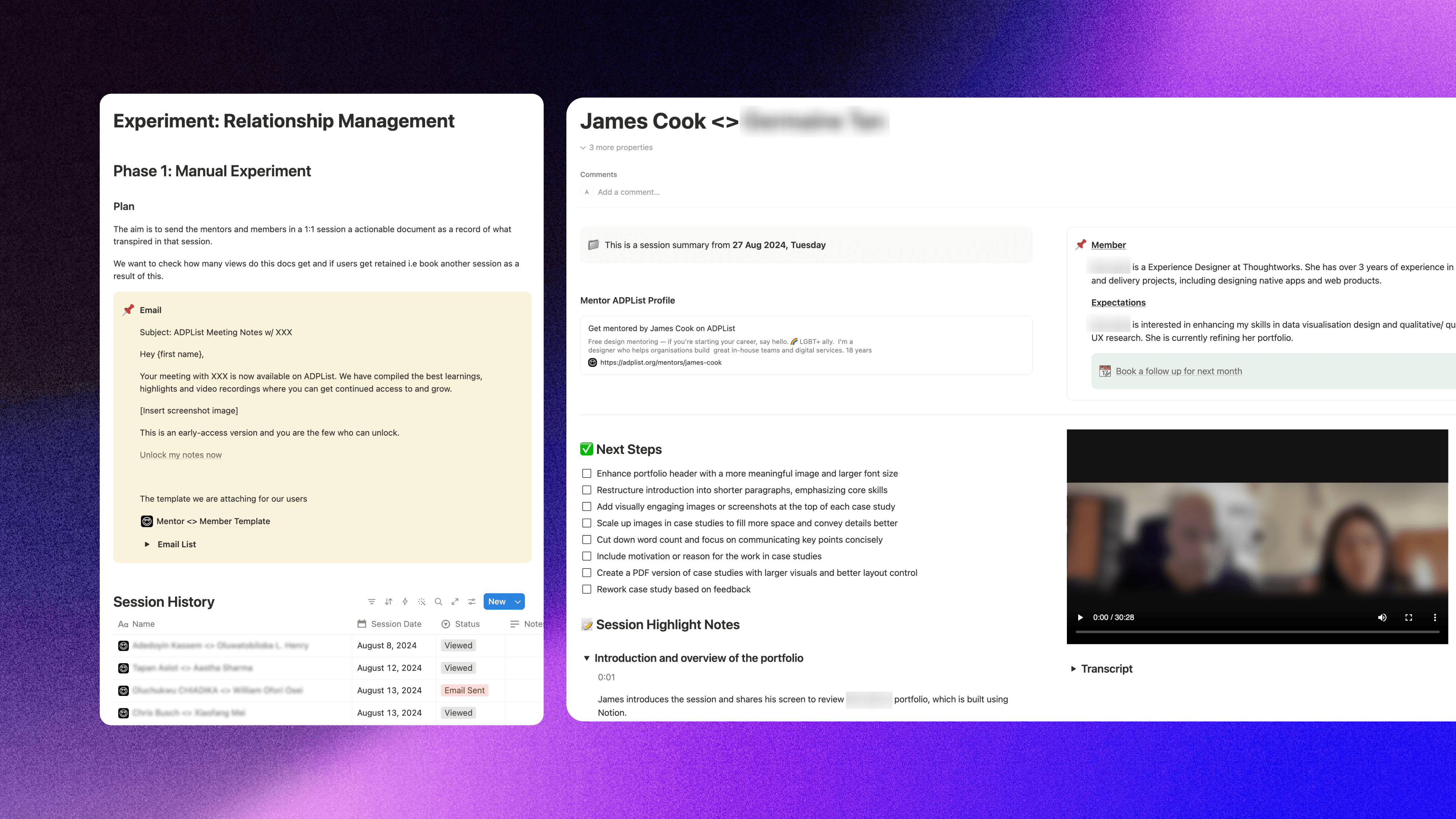
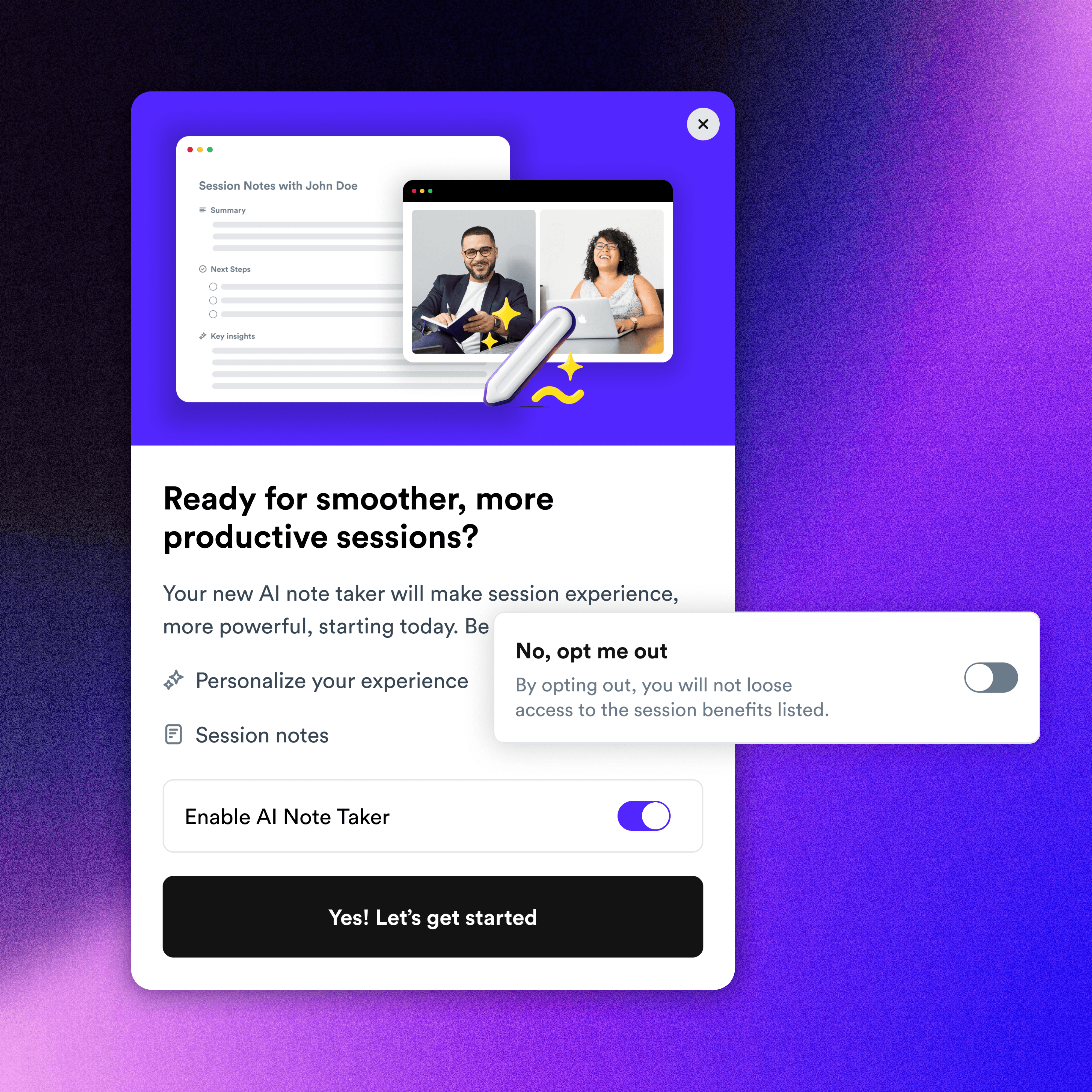

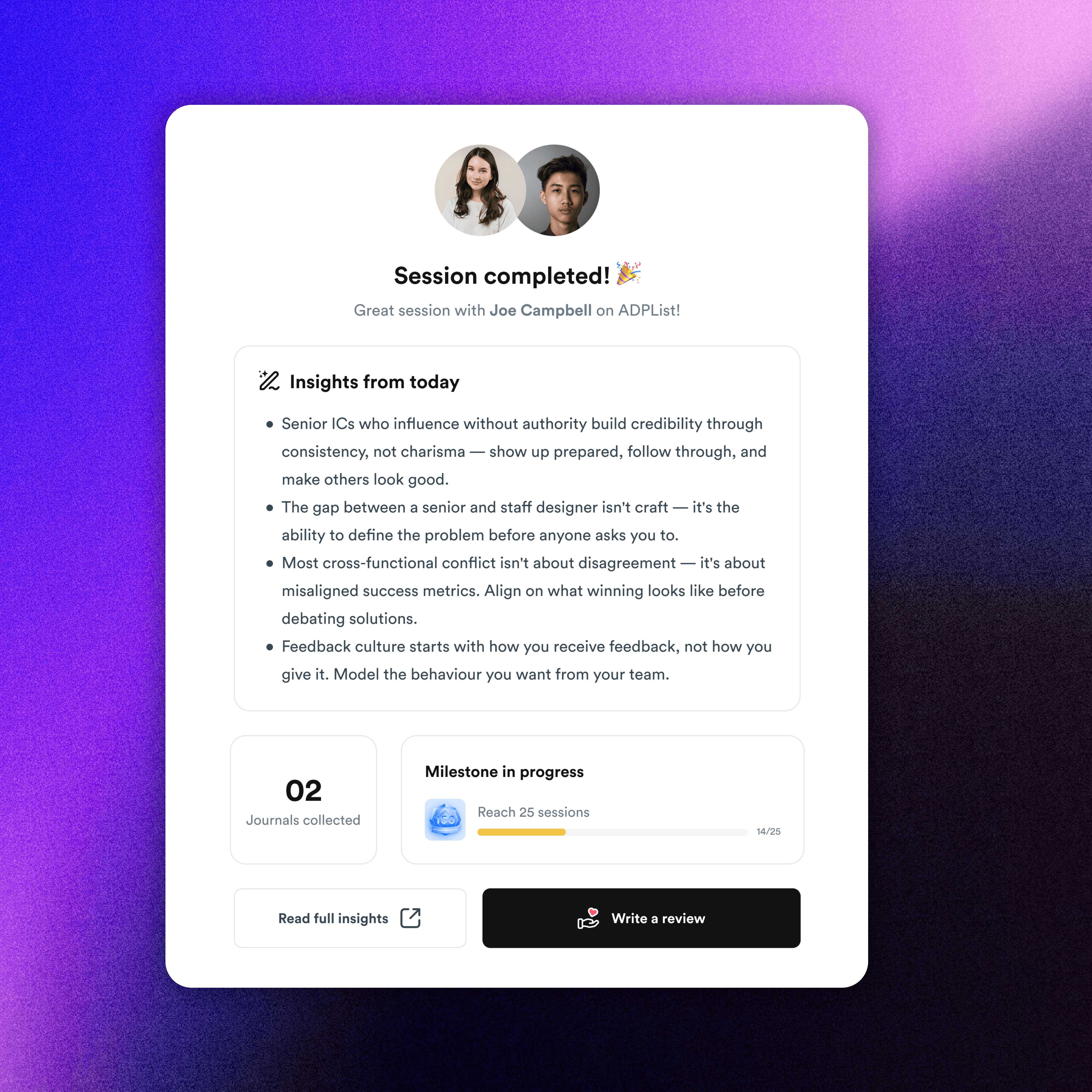
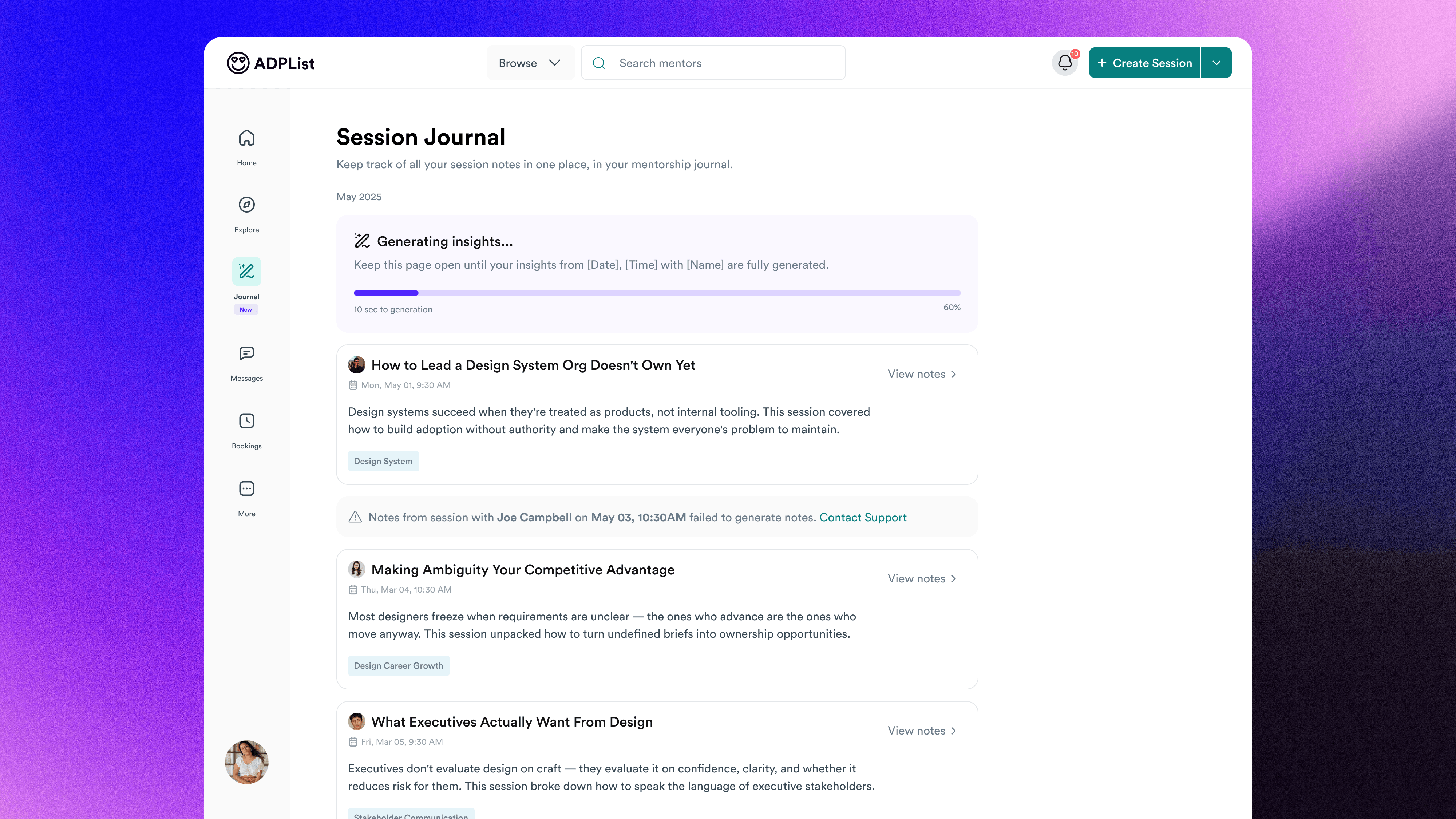
The post-session page was a deliberate decision — surfacing the journal when a session ends, before the user went anywhere. A useful ending changes how the whole session is remembered and whether they book again.

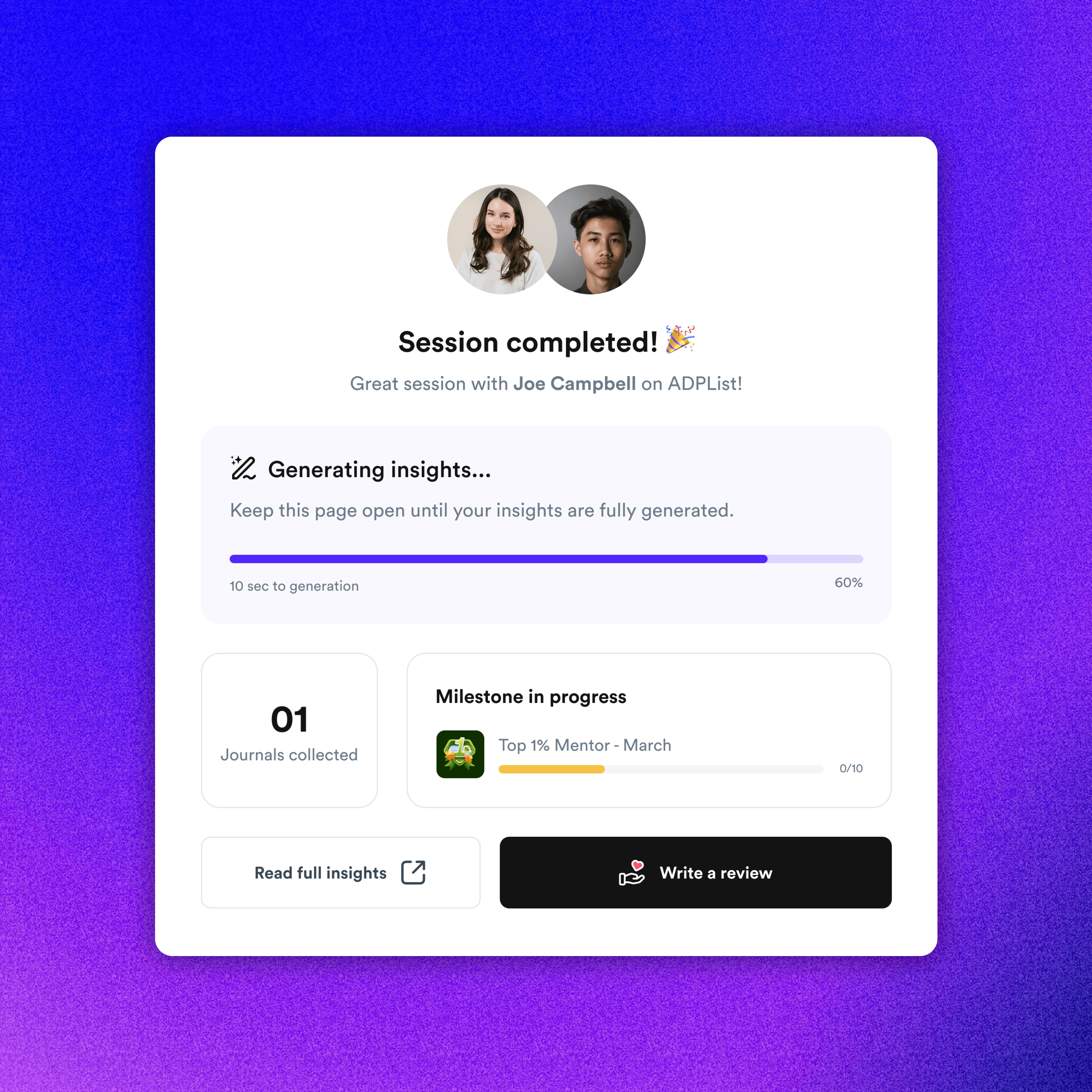
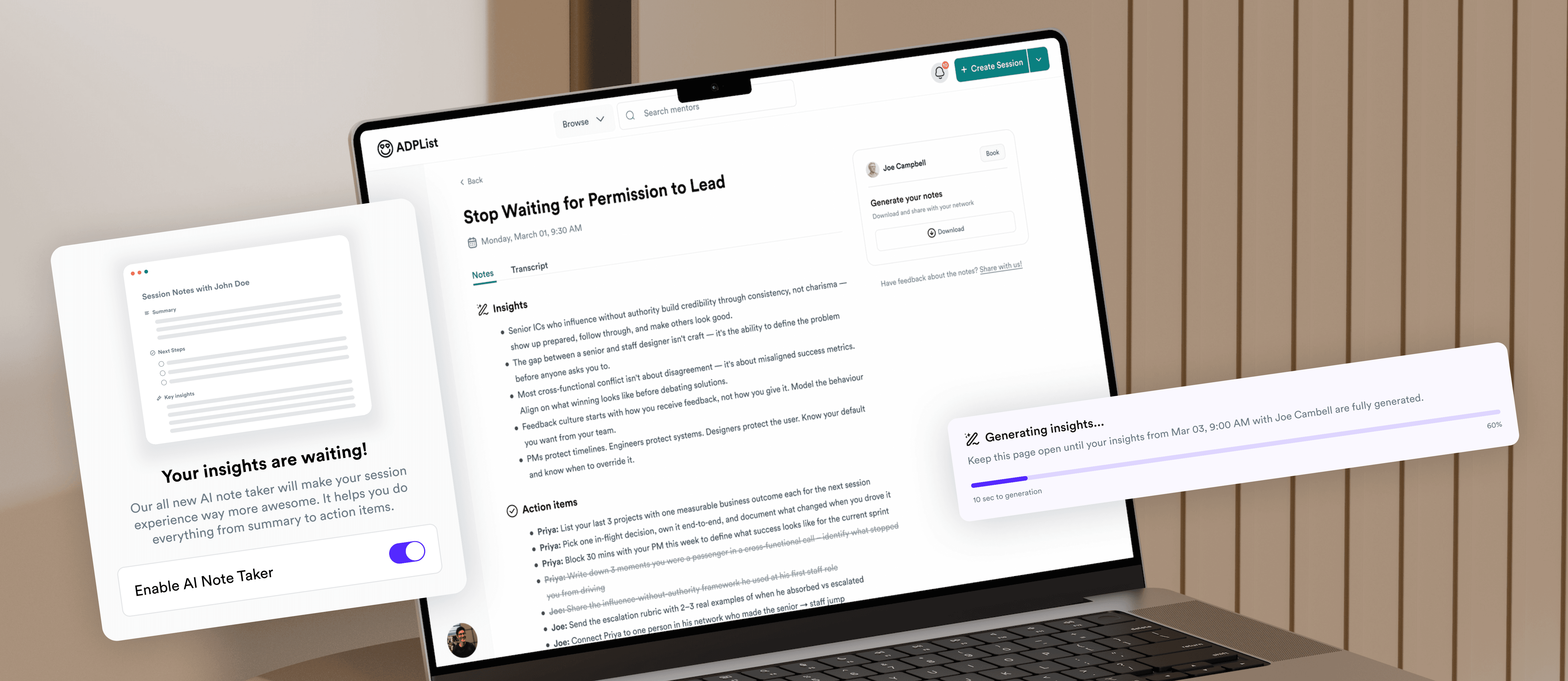
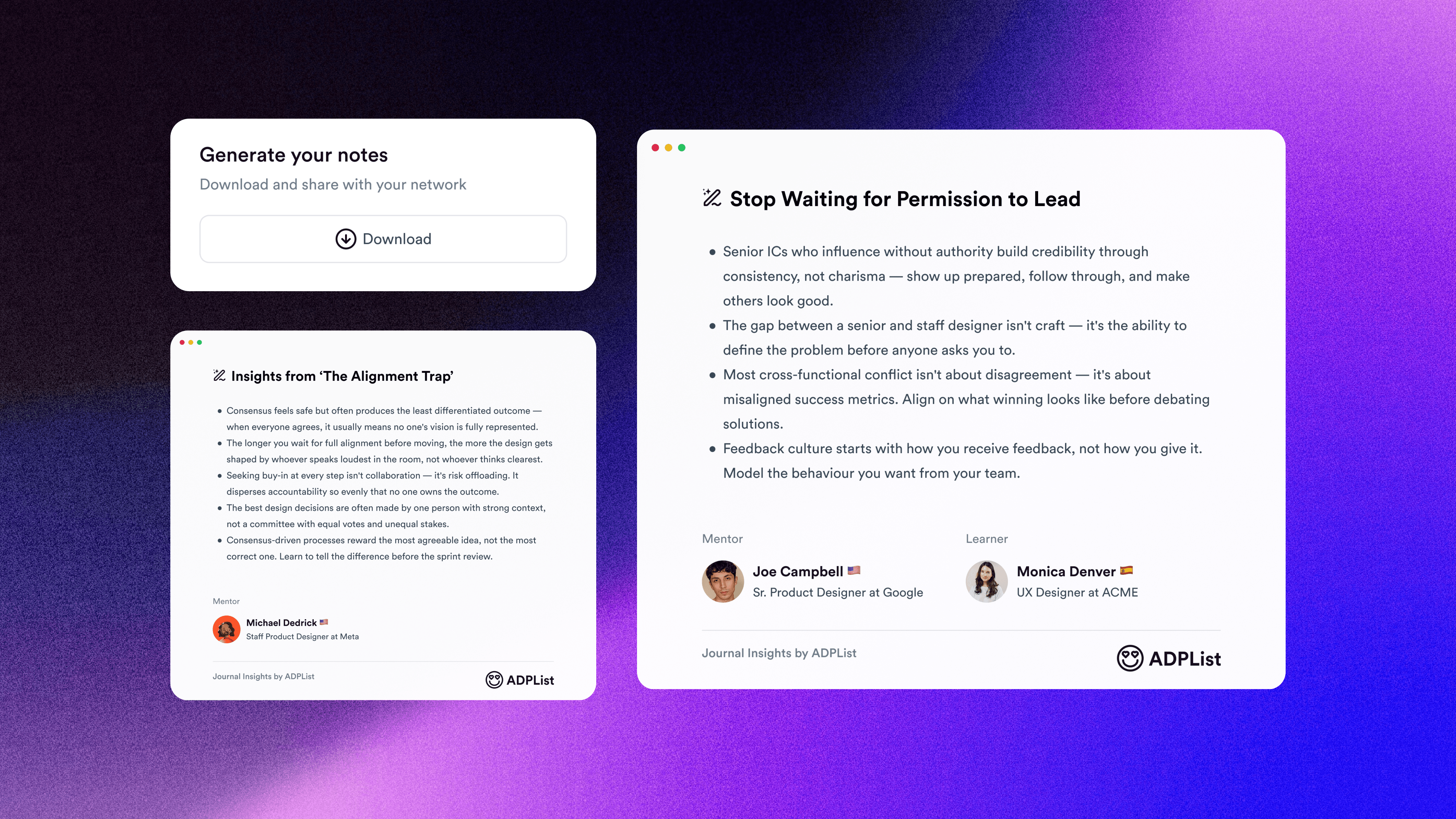
Users could download a summary card showing the AI-generated insights. Designed for both 1:1 and group sessions, the card gave mentorship value a life outside the platform.
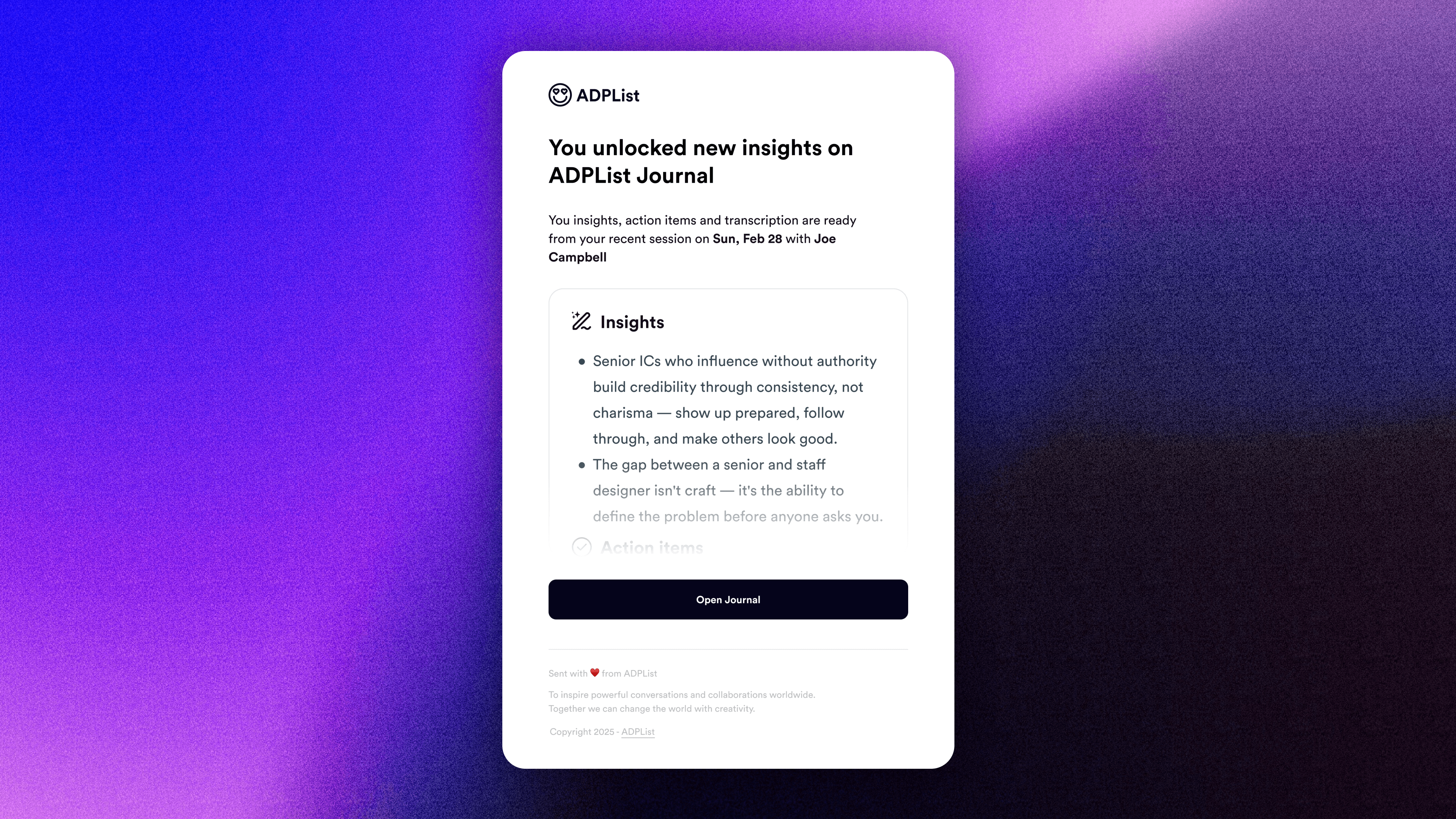
Not every user saw the post-session page and the email was the fallback which had a preview, which brought users back to the platform to read the full journal.
Trade-offs
Editing was on the Phase 1 wishlist but I cut it from MVP. Shipping editing before the core loop was validated would have been optimising for a behaviour we had no proof existed.
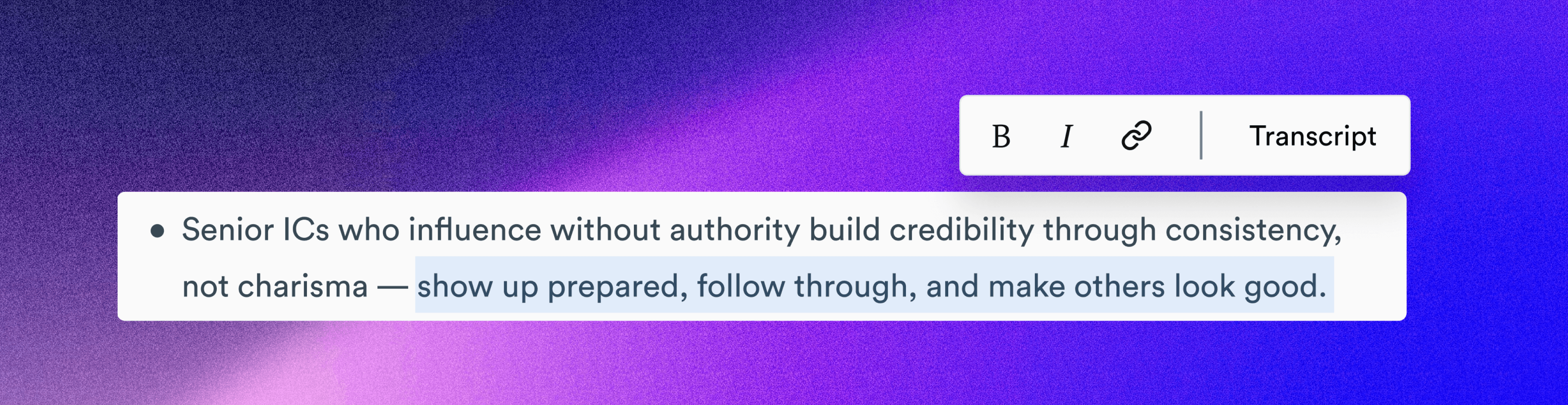
Mentorship on ADPList isn't one conversation, it's a series of distinct contexts. Merging them would have created noise, not memory. Per-session journals meant every insight was retrievable in it's context.
Impact
Post-Launch Iterations
Two iterations shipped post-launch.
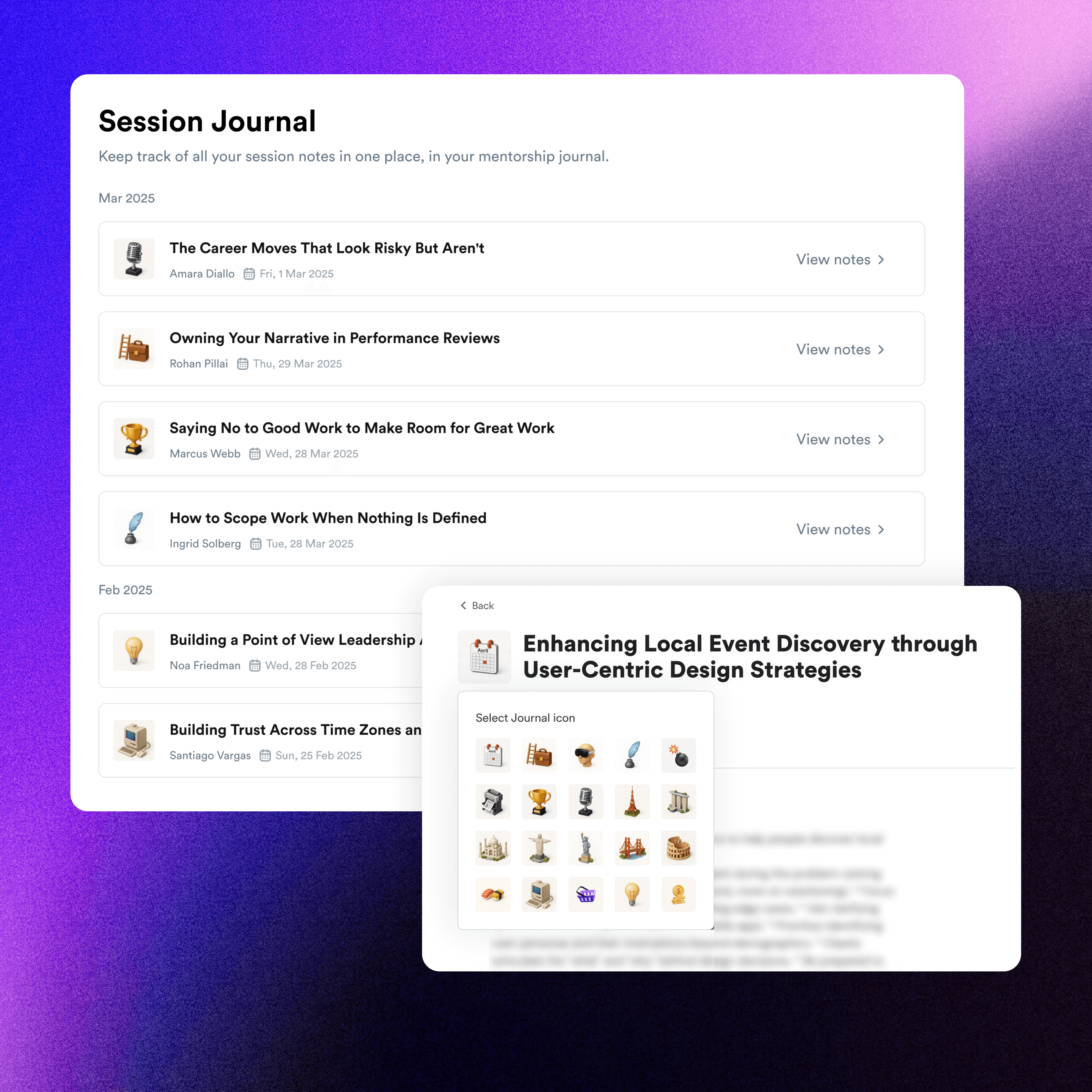
First, a customisable icon per journal where users could identify their sessions at a glance.
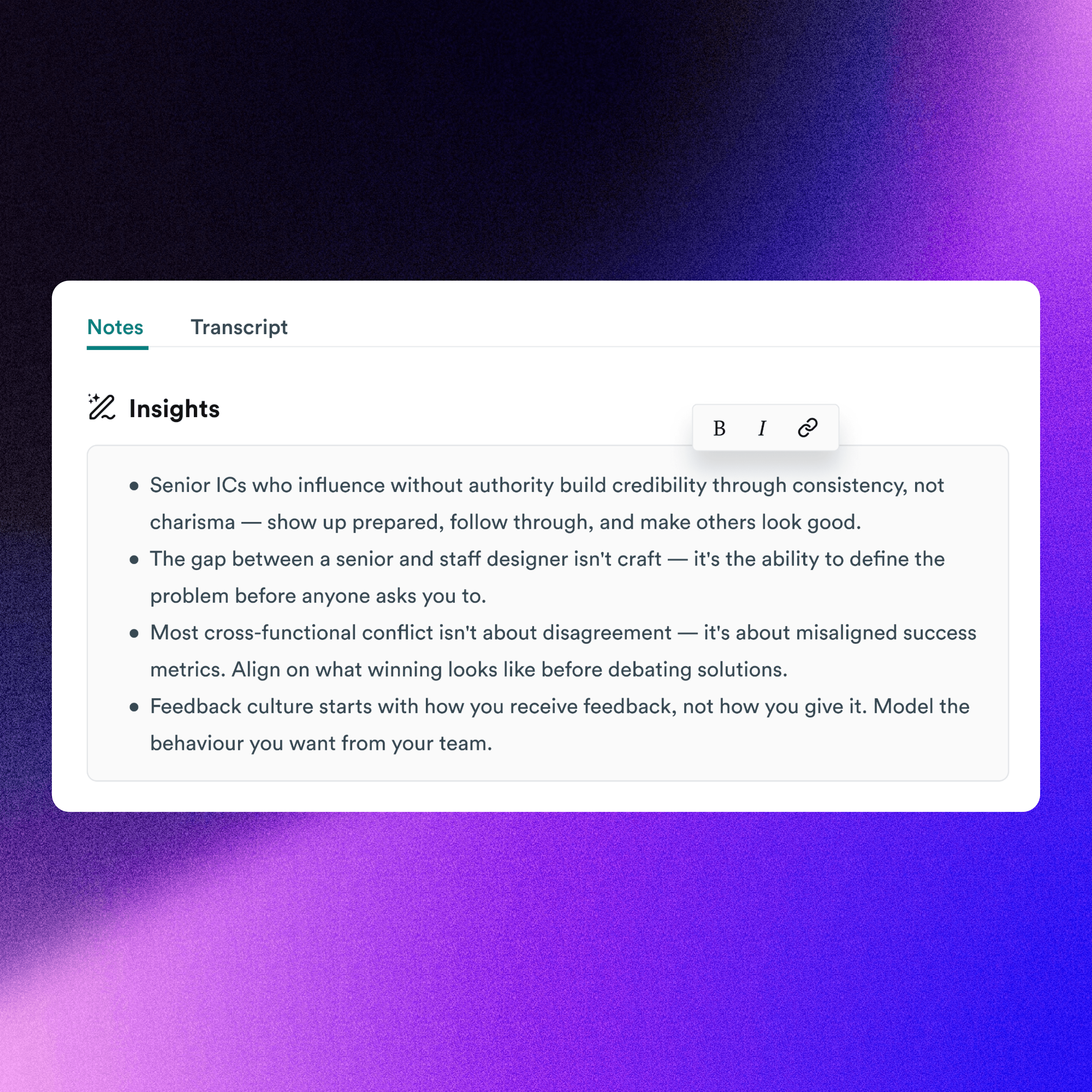
Second, editing capabilities where users could correct and refine AI-generated notes to reflect what actually mattered to them.
Together, they moved Journals from a passive AI output to an active, personalised record.
Reflections
AI made possible what the platform had wanted for years – a memory layer for mentorship.
The manual experiment was the most important thing I did on this project – it proved demand before a single sprint was committed.
If I could change one thing: I'd have pushed to build it sooner. The signal was always there. We just needed the right technology to catch up.